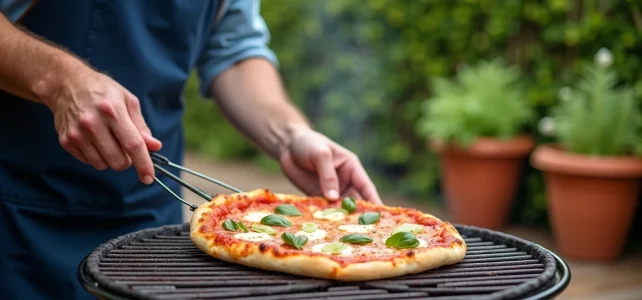
A barbecue-cooked pizza is based on a simple thermal principle: replicating the intense heat of a wood-fired oven by using the closed lid of the barbecue as a cooking chamber. Without a baking stone, heat must be directed and accumulated in other ways, which changes how to prepare the dough, manage the temperature, and top the pizza.
Indirect heat on the barbecue: the mechanism that replaces the stone
The baking stone stores heat and returns it through direct contact under the dough. Without it, the closed-lid barbecue becomes a convection oven if the burners or coals are arranged correctly.
The principle is that of indirect cooking: the heat source is on the sides, never directly under the pizza. On a gas barbecue, the side burners are lit while the central burner remains off. On a charcoal barbecue, the coals are pushed against the walls of the firebox to create a flame-free zone in the center.
The lid plays a crucial role. When closed, it traps hot air and circulates it around the pizza, cooking the toppings from above while the grate sears the dough from below. This logic of intense preheating with the lid closed has become widespread in recent years, inspired by garden pizza ovens that operate on the same thermal accumulation cycle.
Before placing anything on the grate, it should be preheated for several minutes at the highest possible temperature, then slightly reduced. The goal is to achieve even and sufficient heat so that the dough begins to puff up upon contact.
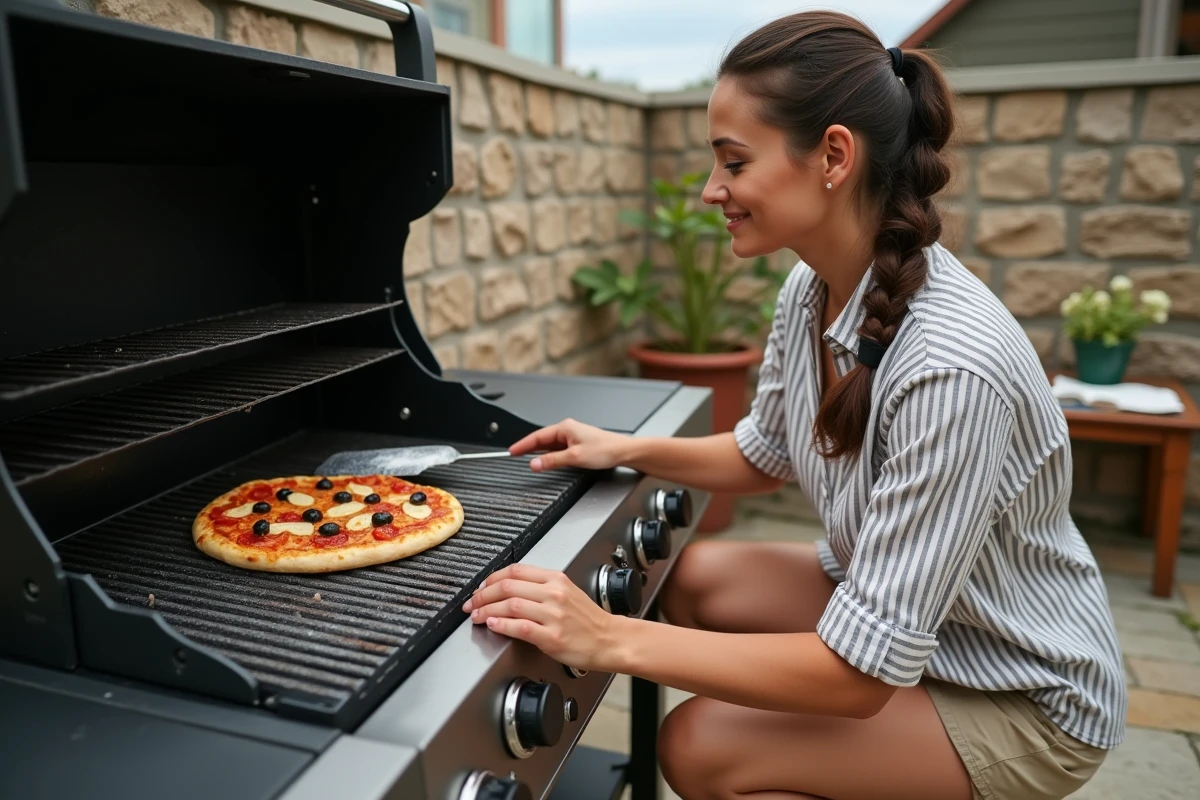
When trying to cook a pizza on the barbecue without a stone, mastering this indirect heat makes all the difference between a soggy crust and a seared one.
Adapting pizza dough for cooking on a grate
Dough intended for a conventional oven does not react the same way on a barbecue grate. The contact is made through spaced metal bars, not a flat surface. Therefore, the dough must be firm enough not to fall between the bars.
Adding a drizzle of olive oil to the dough improves its structure and promotes crispiness when it comes into contact with the hot grate. A moderate hydration of the dough (less water than for a traditional Neapolitan pizza) makes the dough easier to handle and reduces the risk of it sticking or tearing.
Thickness also matters. A dough that is too thin will tear or burn before the toppings are cooked. A thickness of a few millimeters, slightly more than that of a classic thin pizza, yields the best results on the grate.
- Use flour with a medium protein content, which gives a soft dough without being too elastic, making it easier to roll out into a regular shape.
- Let the dough rest at room temperature before cooking so it relaxes and rolls out without springing back.
- Generously flour the work surface and the underside of the dough, or use fine semolina, to facilitate transfer to the grate.
Two-step cooking technique on the grate
Placing a topped pizza directly on the grate almost always results in a disappointing outcome: the dough burns before the cheese melts. The most reliable method is to cook the dough in two steps.
First step: sear the bare dough. Place the un-topped dough on the oiled grate, smooth side down. Keep the lid closed. In a few minutes, bubbles will appear on the surface, and the underside will develop golden grill marks.
Then flip the dough using a wide spatula or tongs. The grilled side ends up on top: this is where the sauce, cheese, and toppings are placed.
Second step: cook the toppings with the lid closed. Once topped, the pizza remains on the grate, still in the indirect heat zone, with the lid closed. The ambient heat melts the cheese and cooks the ingredients without charring the bottom.
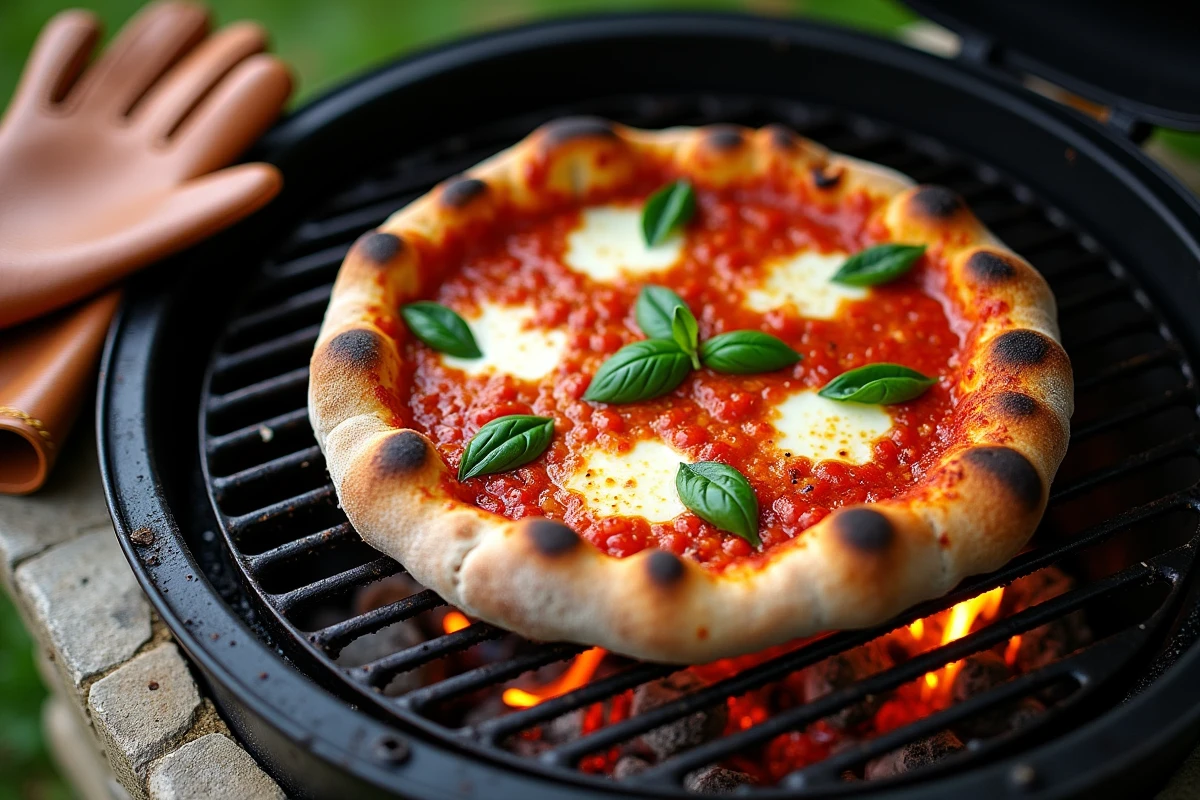
This two-step cooking resolves the main issue of pizza on the grate: the timing discrepancy between the dough’s cooking time and that of the toppings.
The toppings: light and prepared in advance
On a barbecue, the cooking time once the pizza is topped remains short. Therefore, each ingredient must be ready to cook quickly. Meaty vegetables (peppers, mushrooms, onions) benefit from being precooked or sliced very thinly.
The tomato sauce should be applied in a thin layer to avoid soaking the dough. Cheese, grated or crumbled into small pieces, melts faster and covers better than a thick slice.
- Limit the toppings to three or four ingredients maximum to keep the crust crispy and avoid excess moisture.
- Raw charcuterie (bacon, pancetta) should be cooked separately or cut very finely to ensure proper cooking within the allotted time.
- Add fresh herbs (basil, arugula) after removing from the barbecue, never during cooking, to preserve their flavor.
Food safety and handling around the barbecue
One often overlooked point: the pizza is assembled at room temperature, sometimes in full sun, before being placed on the barbecue. Food safety organizations, such as the Food Standards Agency in the UK, regularly remind to limit the time sensitive ingredients are left out of refrigeration (fresh cheese, charcuterie, meat).
Preparing toppings at the last minute and keeping them cool until assembly reduces the risk of contamination. Raw meat products placed on the pizza must reach sufficient cooking, which justifies precooking or slicing them very thinly.
Cross-contamination between utensils used for raw meat and those that touch the cooked pizza remains a real risk during a barbecue. Using separate boards and spatulas for each use avoids this problem.
The closed-lid barbecue, a dough suited for the grate, and a two-step cooking process are enough to produce a pizza with a well-marked crust and melting toppings. The only parameter that requires practice is the timing of flipping the dough: too early it tears, too late it burns. Two or three attempts will resolve the issue.