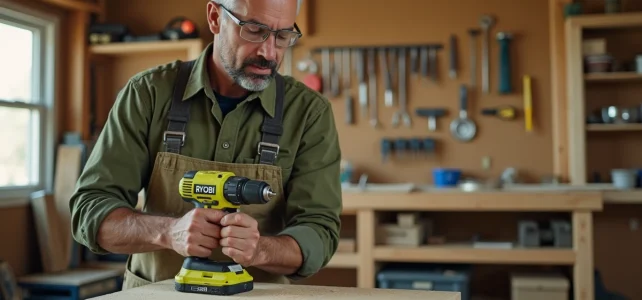
On a a renovation site for a bathroom, the impact driver is plugged in, followed by the circular saw to cut down some battens, and then we finish with the sander. Three tools, one battery: this is the promise of Ryobi’s ONE+ system.
Does this promise hold when we multiply the hours of use on the same project? Feedback varies depending on the user’s profile and the type of task. We dug into the topic to sift through legitimate frustrations and misaligned expectations.
Ryobi HP Brushless Range: What the Brushless Motor Changes
Most negative feedback about Ryobi concerns the entry-level range, the one with brushed motors. We often come across comments like “it lacks torque” or “the battery drains in twenty minutes.” These criticisms rarely target the HP Brushless range, which has been the brand’s true playground for several years.
Ryobi now positions its HP line as a semi-professional alternative. Recent European catalogs highlight construction uses (renovation, finishing work) with internal comparisons between HP and the standard range. The brushless motor reduces friction and extends the tool’s lifespan in a measurable way compared to a traditional brushed motor.
In practice, there is a noticeable torque gain on the HP drill-driver and the impact driver. For driving screws into hardwood or drilling into hollow brick, the difference with the entry-level range is felt within the first few minutes. The reviews on Ryobi tools vary on this point for intensive continuous work (metal cutting, long sanding), where brands like DeWalt or Makita maintain an advantage in raw power.
ONE+ 18 V Batteries: Real Autonomy and Field Compatibility
The ONE+ system relies on battery compatibility across more than two hundred tools. This is the main selling point, and it works: you buy a drill, and you can use the battery for the blower, the glue gun, or the work light. No adapter, no restrictions.
Compatibility between tools remains Ryobi’s true competitive advantage against more closed or expensive ecosystems. A DIY enthusiast starting their collection can gradually equip themselves without having to buy new batteries for each new tool.
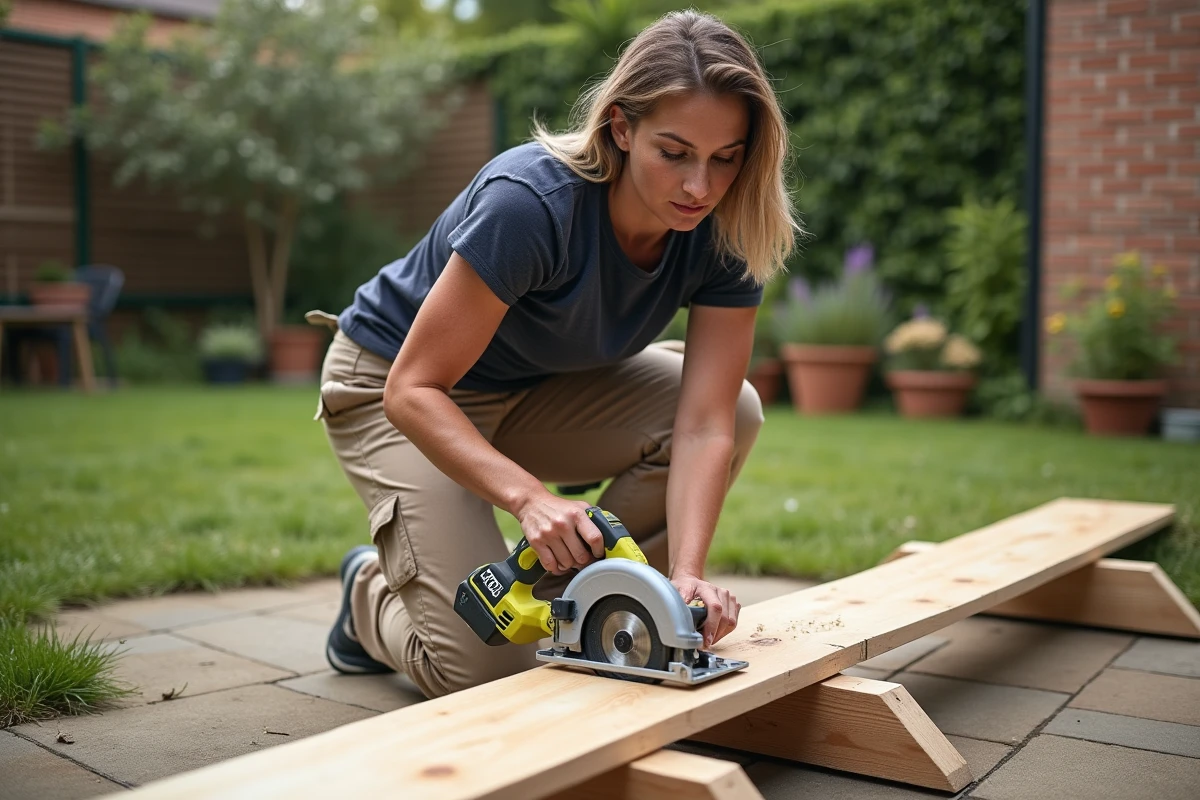
Autonomy directly depends on the capacity of the battery used. With high-performance models (higher capacities), you can manage a day of varied DIY without difficulty. However, entry-level batteries show their limits on power-hungry tools like the circular saw or the hammer drill.
- High-capacity batteries are suitable for intensive cutting and drilling tools but significantly increase the weight of the tool in hand.
- Compact batteries are sufficient for screwing, lighting, or finishing tools, with a reduced weight that makes working at height easier.
- The Ryobi fast charger recharges a standard battery in less than an hour, allowing you to rotate between two batteries on a job site.
Ryobi vs. DeWalt and Makita: Pricing Positioning and Limits
The question is often raised on forums: “Ryobi or DeWalt?” The answer entirely depends on the use. For an electrician or carpenter who uses their tools eight hours a day, five days a week, Ryobi is not designed for daily intensive professional use. The plastic housings, bearings, and switches cannot withstand the same pace as a tool designed for that.
For a regular DIYer renovating an apartment, building a deck, or maintaining a garden, the quality-price ratio clearly favors Ryobi. You can get a kit of five brushless tools for a budget significantly lower than that of an equivalent kit from DeWalt or Milwaukee.
Where Ryobi Stands Out
The breadth of the ONE+ range has no equivalent among direct competitors in this price bracket. You can find gardening tools (hedge trimmer, brush cutter, lawn mower), workshop tools (miter saw, belt sander), and even job site accessories (radio, fan, lamp) all operating on the same battery platform.
Rental companies are also starting to integrate some Ryobi 36 V tools into their gardening fleets. Ryobi battery-powered chainsaws and brush cutters are available for short-term rental, indicating a level of reliability sufficient for shared and repeated use.
Repairability and Ryobi Customer Service: An Often Overlooked Point
The durability of a tool is not only measured by its robustness but also by how easy it is to repair. In this area, Ryobi has made recent progress. Exploded views and spare parts references are now accessible through the network of authorized repairers in Europe.
This is a notable change. For a long time, replacing a switch or chuck on a Ryobi tool was a daunting task. Access to spare parts simplifies maintenance and extends the lifespan of tools beyond the warranty period.
- Common wear parts (brushes, chucks, blades) can be found at authorized dealers and on online spare parts platforms.
- Ryobi’s customer service offers an extended warranty upon product registration, an advantage that many buyers forget to activate.
- The published exploded views allow an experienced DIYer to diagnose and replace certain components themselves.
Ryobi occupies a specific niche: that of the regular DIYer who wants a broad ecosystem without investing in professional tools. The HP Brushless range significantly raises performance levels compared to brushed models. For occasional to moderate work, reliability is present. For daily professional use, it’s better to turn to brands designed for that pace. The choice is made based on usage frequency, not on the color of the casing.