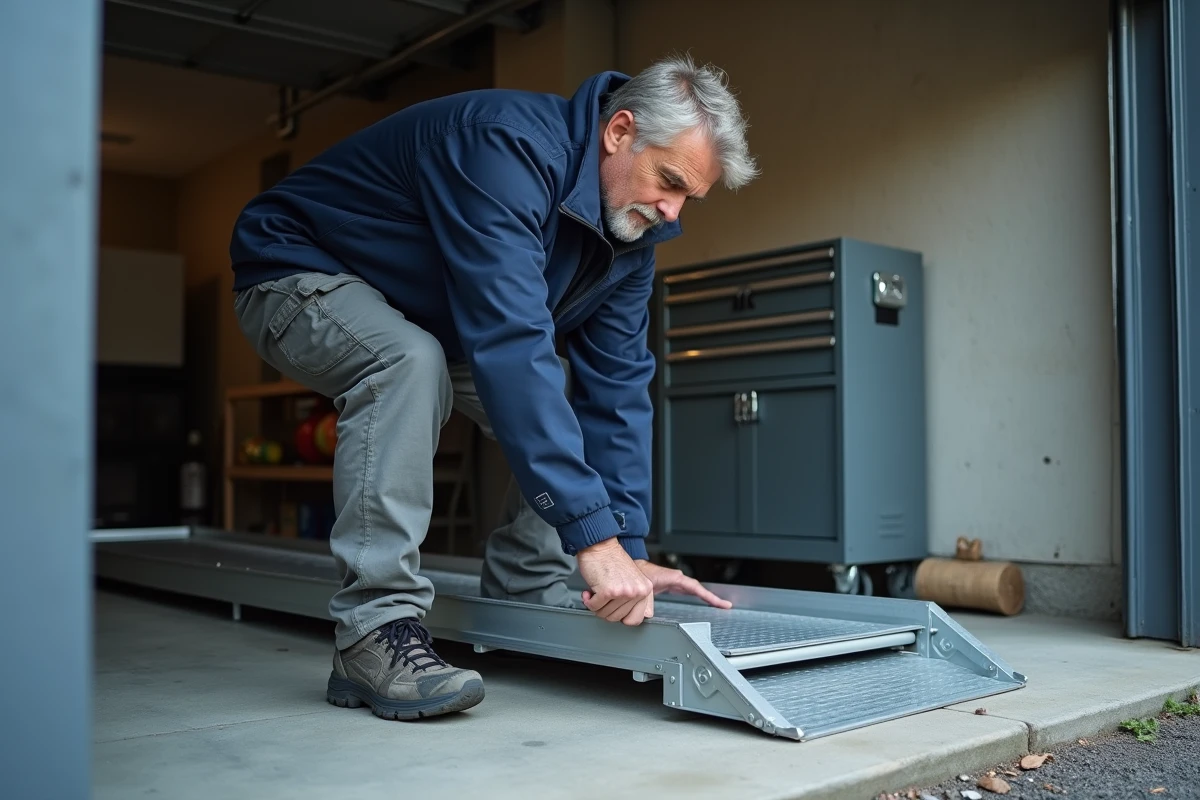
A foldable aluminum ramp is primarily chosen based on technical criteria that product sheets do not always highlight. At Brico Dépôt, the offering has been structured in recent years with more detailed information, but one must know how to read it. We review the points that make the difference between a suitable purchase and undersized equipment.
Point load and distributed load: the technical distinction that foldable aluminum ramps impose
Since the 2023-2024 catalog updates, Brico Dépôt now displays two distinct values on its product sheets: the maximum load per ramp and per pair. This distinction changes everything.
The distributed load corresponds to the total weight of a machine whose wheels or tracks are spread over the entire usable surface. The point load, on the other hand, concentrates the mass on a small area (one wheel, one axle). Confusing the two leads to either over-sizing or, worse, under-sizing the ramp.
We recommend always starting from the loaded weight of the machine (and not the empty weight), then checking whether the ground contact is point-based (narrow pneumatic wheels) or distributed (rubber tracks). To choose a foldable aluminum ramp at Brico Dépôt, it is this cross-reading that avoids the most common sizing errors.
Usable width and turning radius: adapting the ramp to your compact machines
General articles discuss ramp width based on the vehicle. The real-world situation is more nuanced. The turning radius and track width of compact machines (mini-excavators, micro-tractors, riding mowers) determine the minimum usable width much more than the simple overall dimensions.
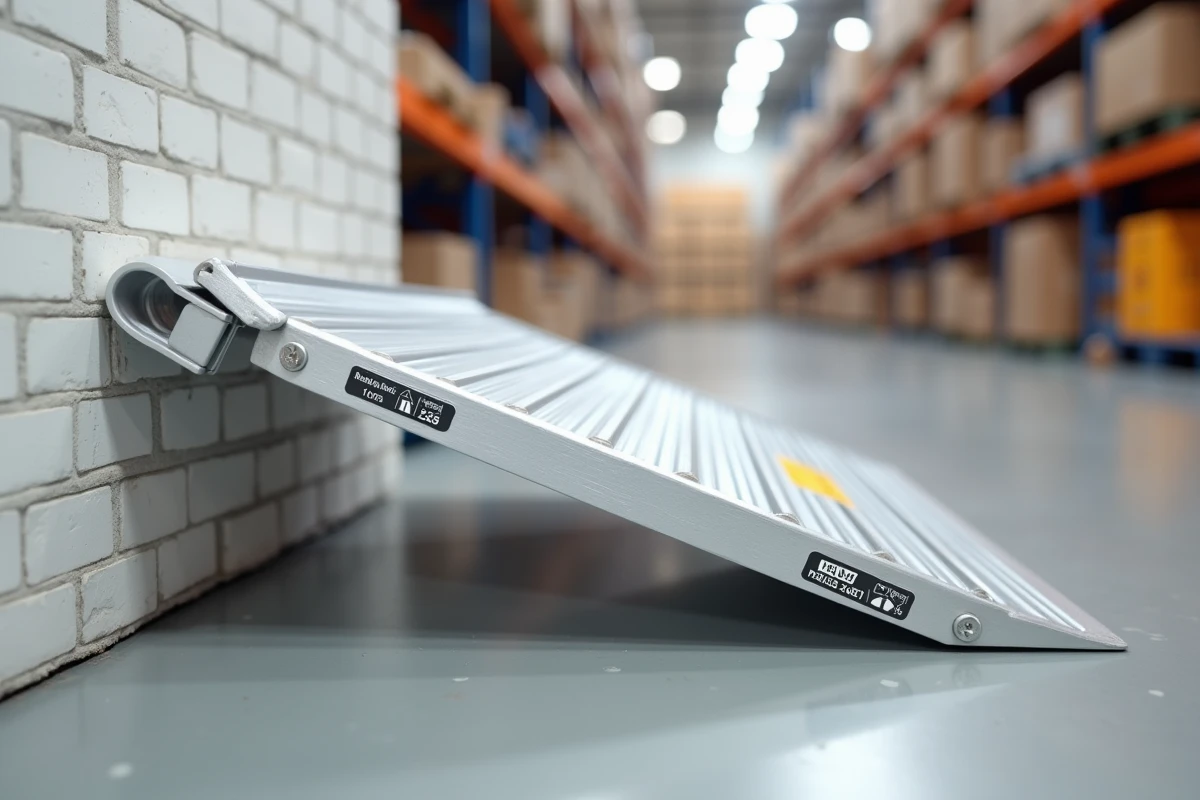
A machine whose outer tracks or wheels come within a few centimeters of the ramp’s edge presents a risk of veering off course with the slightest directional deviation. On a foldable aluminum ramp, the absence of high edges on certain models exacerbates this risk.
Points to check before purchase
- Measure the track width of the widest machine you plan to load, then add a lateral safety margin of at least the width of a tire on each side
- Check for guiding edges on the targeted model, as not all foldable models have them
- Ensure that the unfolded length allows for an ascent angle compatible with the ground clearance of the machine (too steep an angle can cause the chassis to bottom out at the pivot point)
These checks take a few minutes and prevent a return to the store or a loading incident.
Non-slip surface and type of ground: two related variables
The non-slip surface of a foldable aluminum ramp does not work the same way depending on the equipment rolling over it. Rubber tracks naturally grip on ribbed aluminum. Smooth and narrow tires on wet ground, much less so.
But the point we most often see neglected concerns the ground on which the base of the ramp rests. Manufacturers distributed by Brico Dépôt (notably Ribimex and RIBILAND) now specify usage recommendations in their manuals based on the type of ground. For example, use on non-stabilized interlocking pavers is not recommended, as the foot of the ramp can sink or slip under load.
On raw concrete or thick asphalt, stability is rarely an issue. On slabs, thin asphalt, or compacted gravel, we recommend placing a distribution plate under the ramp supports. This detail is not found in any competing guide, but it conditions the safety of the entire setup.

Foldable aluminum ramp or steel ramp: decide based on actual use
Aluminum is not always the best choice. We regularly observe this on job sites where the ramp endures repeated shocks or serves as a permanent passage.
The advantage of the foldable aluminum ramp lies in its lightness and reduced storage space. For a tradesperson loading a mini-excavator two to three times a week from a trailer, it is the most practical format. However, for intensive daily use with heavy machinery, a fixed steel ramp offers superior rigidity and durability, even if it weighs significantly more.
Criteria for choosing between aluminum and steel
- Frequency of use: occasional to regular use favors foldable aluminum, while daily intensive use leans towards steel
- Weight of loaded machines: beyond a certain capacity, steel models remain more competitive in terms of load capacity/price ratio
- Transport constraints: if the ramp needs to travel in a utility vehicle or on a trailer, the folding and lightness of aluminum are decisive
- Storage environment: aluminum naturally resists corrosion, whereas untreated steel rusts quickly outdoors
At Brico Dépôt, foldable aluminum models cover the majority of needs for individuals and tradespeople. Steel models, less present on the shelves, are more often available by order or from specialized distributors.
Loading angle and ramp length: the calculation that no one does
The length of the ramp directly determines the ascent angle. The shorter the ramp, the steeper the angle, and the greater the risk of bottoming out or slipping increases. This is not an aesthetic detail; it is a mechanical constraint.
For a standard trailer tailgate, we recommend measuring the height of the floor relative to the ground, then aiming for an angle that allows the machine to cross the pivot point without the chassis touching the ramp. Machines with low ground clearance (some riding mowers, compact forklifts) are particularly sensitive to this parameter.
Before validating a model in-store, place the unfolded ramp against the tailgate of your vehicle and visually check the angle obtained. If the slope seems aggressive, move to the longer length. The additional cost is marginal compared to the risk of damaging a machine or causing a tipping incident.
The choice of a foldable aluminum ramp relies on a handful of concrete checks that product sheets do not always summarize. The distinction between point load/distributed load, compatibility with the supporting ground, and angle calculation remain the three points that separate a thoughtful purchase from a default purchase.