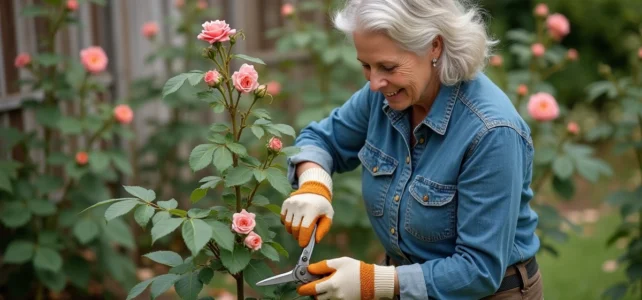
The severe pruning of an old remontant rose does not always compromise the next blooming, contrary to popular belief. Some old varieties do not tolerate hard cuts well, while others rebound more vigorously after drastic pruning. The most persistent fragrances do not systematically come from the most colorful or modern varieties.
Selection criteria, long oriented towards appearance, sometimes neglect robustness and reblooming. An ill-suited intervention can reduce vigor or the abundance of flowers, even on plants deemed indestructible.
How to recognize an old remontant rose and why its pruning changes everything
Knowing how to spot an old remontant rose requires a keen eye and a true understanding of the plant. First, look at the silhouette: the main branches thicken, the bark cracks, a few shoots from the previous year grow timidly, and the blooming loses its splendor. The stems that have endured the years are adorned with gray wood, hard to the touch, while the young shoots struggle to emerge. The entire pruning strategy is built from these clues.
Whether the rose is bush, climbing, or shrub, the goal remains the same: to rejuvenate it, to help it regenerate. On a remontant rose, it is not just about shortening the tips. It is necessary to renew the structure, encourage the birth of new stems, and remove anything that exhausts the plant. The suckers, those vigorous shoots coming from the rootstock, must be eliminated at their base to prevent them from taking over.
If you wish to go further, some tips for pruning an old remontant rose allow you to refine each step: choose the right time, select the stems to keep, manage the exposure of the plant’s heart to light. A well-executed pruning transforms the blooming, encourages reblooming, and gives new life to the rose to face the coming seasons. Precision and patience make the difference: each intervention prepares the rose’s strong comeback.
What actions to adopt for stress-free pruning and boosting blooming
Carrying out an effective rose pruning relies primarily on preparation and rigor. Equip yourself with a clean and perfectly sharpened pruner, as this reduces the risk of disease and ensures clean cuts. Spring pruning is the most favorable time for remontant roses: the risk of frost diminishes, sap circulates, and the buds are well visible and ready to grow.
Before cutting, carefully observe the overall structure. It is better to start by removing anything that obstructs:
- dead wood
- weak or poorly oriented branches
- intertwined stems that prevent air circulation
This first step, a true cleaning pruning, opens the center of the rose to light and encourages the plant’s vigor. Keep three to five main branches, evenly distributed, then shorten them just above an outward-facing bud to guide growth outward.
For the oldest or neglected subjects, the so-called fishbone pruning method is remarkably effective. It involves removing weak shoots and significantly shortening the main branches. This technique, far from being complicated, gives a breath of fresh air to the rose and stimulates the appearance of new shoots.
Once the blooming has passed, perform a cleaning pruning: cut off the faded flowers. This simple action prolongs blooming and encourages the arrival of new buds. To avoid disappointments, never prune too short on very old wood, at the risk of exhausting the plant. Taking the time to observe before acting offers the rose the chance to regain its vitality.

Fragrant roses: our favorite varieties and tips for choosing them
The richness of rose varieties provides access to a palette of scents and colors that is hard to match. Some bush roses, like the famous ‘Queen Elisabeth’, offer regular blooming and a delicate fragrance, perfect for structuring a flower bed or highlighting a pathway. The climbing remontant roses charm with their abundant blooms throughout the season, ideal for covering a pergola or adding character to an old wall. For pronounced fragrances and a bold presence, turn to large-flowered varieties.
Selection criteria for a fragrant rose
To select the ideal variety, it is better to focus on a few key points:
- Fragrance: smell, compare, detect the note that attracts you, fruity, spicy, or musky depending on the varieties.
- Blooming: remontant roses guarantee a renewal of flowers from spring until the first cold.
- Resistance: examine the foliage’s durability, disease tolerance, and adaptability to your soil.
Climbing and shrub roses add relief and volume while dispersing their fragrances with the wind. To prolong the pleasure, mix several types of remontant roses and stagger the blooming periods. Consulting a passionate nursery grower often allows you to discover old treasures or unexpected varieties. Choosing a fragrant rose is betting on emotion: each passage in the garden becomes a living memory, a sensory surprise, an invitation to curiosity. Nothing compares to the first whiff of a rose in the early morning, a silent promise of a garden that never ceases to reinvent itself.